Interviews
We chose to conduct interviews about pieces that left behind questions, made us curious about their process of creation, or that just lingered in our minds. In no way is this a value judgement of the pieces, but rather a further exploration into the creator and background of them based on discretion of the editors.
Somnolent Insomnia
Film
Evan P. '27
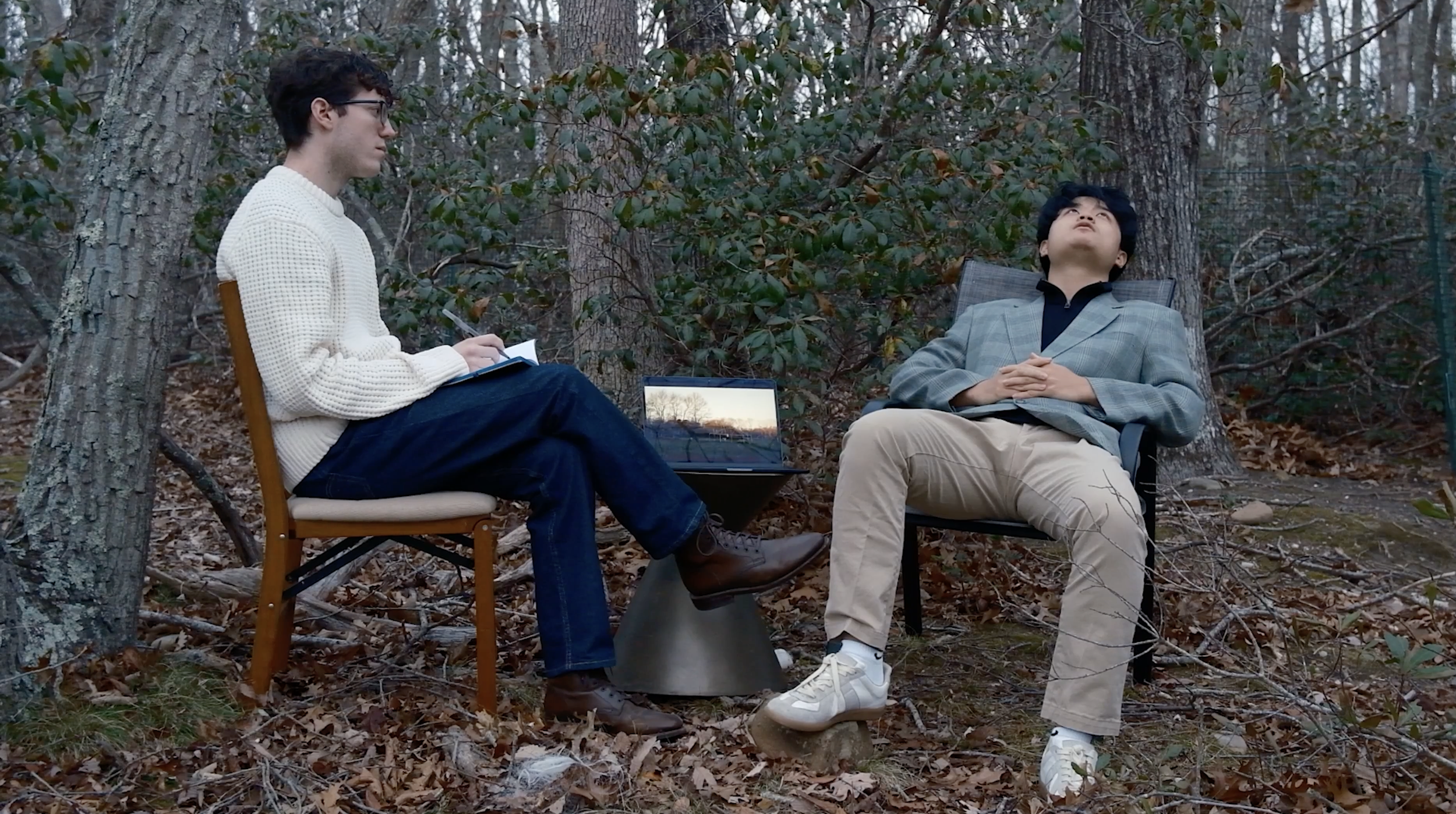
A dream of a character, where his recollection and the dream of the past intersect together, constructing a maze about his ego.
What is your background with film? What genres do you enjoy working with?
This film is actually homework from last semester's Cinematography class, in which we had to shoot a dream sequence of about 2-3 minutes. So, technically, this is not a narration film. However, when I started writing the script, I realized I had a lot to say about the topic of dreams, and I thereby severely exceeded the time limit. Also, when I reviewed the work I did in that class, I found that I unconsciously tended to construct sequences with a dream-like structure. I don’t like stories with traditional plots. It is boring to create a work that the audience can easily predict the ending of.
What types of films do you enjoy watching? Do you think they align with the films you create?
I enjoy watching films that talk about the tranquil daily lives, such as Éric Rohmer’s and Edward Yang’s films. Their films usually don’t have intense dramatic conflicts but are merely about a placid story. I can’t say that my film's style is similar to theirs, but I wish that in the future, when I have more time and life experience, I can shoot a film like Edward Yang’s Yi Yi.
What was the starting point or inspiration for this film?
In this film, there is a narrated dream about a boy’s life. It is a real dream I had before, and I expanded it in my film according to my dream journal. I dream a lot, almost every night, and I record some of the ones I think are interesting and useful. Hence, it is like a corpus for my composition. As I said, this was initially a Cinematography homework assignment, and I had no idea what I was going to shoot until I reviewed my dream journal and found that dream.
What was the biggest challenge you faced during production? How long did it take to produce?
Shooting the first scene was hard, where I had to direct 5 people to walk in a complicated order and repeat it. However, the biggest challenge, I believe, is definitely the shot in the snow. We shot that scene in the morning, and it was extremely freezing. I could barely feel my hands. Plus, that day was windy. I felt that we were shooting somewhere inside the Arctic Circle. Fortunately, the entire shooting schedule was pretty short, no more than one week. The preproduction took a bit of time. We got that assignment before Thanksgiving, and I spent the whole break and an extra week to come up with the final idea.
What was the editing process like for this film?
In Dr. Gansky’s Cinematography class, we had been taught how to edit through Adobe Premiere Pro, so I was proficient in it by the end of the semester. I edited during shooting, and the final edit took me only one night after I got all my footage. I worked until 3am that night, not because the deadline was the next class, but because editing is really addictive to me.
What message or feeling do you want to convey to viewers?
Primarily, I want to establish a dreamlike feeling—this was also my prompt. Therefore, I intentionally set up this elusive beginning; I want the audience to forget what leads them to the story, which is an essential characteristic of a dream. Moreover, through the dream, I want to express a common confusion that teenagers face as they approach a critical point in their lives, the answer to which is also included in the film.
America, you toxic lover
Writing
*political and violent references
Gabriela A. '28
This poem is inspired by how I feel towards a country that I love, but feel frustrated and angry about how it is being ruled.
What is your background with writing? What genres do you usually write about?
I just started writing, but I usually write poems about my feelings of crushes because I feel like they’re too big and I just want to write them down so I can get them out. But I do sometimes write poems about other things, such as adults treating you as a kid, because I think once we get to a certain age, adults should treat us with more respect. But most of my poems are more romance and unrequited love.
What was the specific moment, image, or idea that first sparked this work?
Hamilton, the musical. In the musical, when Aaron Burr and Hamilton duel, Hamilton says to himself, from an edit to be specific, “America, you great unfinished symphony,” and the edit covers how tragic America has been with deaths, ICE raids, and protests that leave more harm than good, and how, in America, we’re not living up to our full potential. What I didn’t like about the video was that it said “we’re not angry enough.” Yes, I feel like our voices should be heard, and there’s the other end of going to full anarchy, which in theory sounds great but being angry isn’t going to solve anything. It just causes more harm. I think there should be balance but it’s very hard to find that right now. That’s the moment when I thought “I want to write a poem about how thankful I am for this country, being that I’m first generation, my family are immigrants, and this country is honestly the reason I get to be here at this school. It’s why I have the life that I have so I can’t take that away from America, but also it’s being ruled in a horrible way, so the moment was actually Hamilton the musical in that edit.
Describe your writing process. How did this piece evolve as you wrote it?
My writing process is that I have an idea so I write it down. I usually write things down by hand, not on a document or anything, I later transfer it. So I start writing it down and I think carefully about what I’m going to write because since I write with a pen, I have to be very careful. I will do edits, but it just makes me be more concise with my words and what I truly want to say on this page that I have. Initially my goal was to show that although I respect this country and love it, it doesn’t live up to its full potential of what I want it to be. I wanted to use what Hamilton did, “America, you great unfinished symphony,” and say America and then something else. What first came to mind was a toxic lover because I love this country and it has done great favors to me and my family but it isn’t acting in the way it should. After I wrote it down I wrote about how the leaders in our country claim to be such saints and in my first draft made a reference to Christ and the Pharisees because they claim to be so holy, but then changed that to be more about political parties because I think that both are failing. They shoot for the same goal in very different manners.
Why is this piece important and relevant now? What message are you trying to send to readers?
Million dollar question, actually. It’s very relevant because I think people usually, from what I see, don’t have an open mind to those without the same political opinions and beliefs. But then there’s the other end of the spectrum with people fully hating on America and wanting to move away. I think it’s just realized that there’s a middle ground and we can love this country for what it is. People love countries, Mexico for example, an amazing tourist destination, the food, the music, the people but the government isn’t the greatest; it’s run by cartels, but that’s not what the country in itself is, it’s the people. “We, the people” (in the American style) is why America is so special because it’s where immigrants truly can come. We’re all immigrants so I think it’s very important that there is a middle ground. I’m trying to send the message that it’s okay to love your own country. I think it’s very normalized to hate on this country, and you can have your own opinions, but to say you hate it is a bit extreme and we don’t want to go to the other extreme of blindly obeying the government. So what I want readers to recognize is that there can be middle ground. The last line in my poem is, “I ask for a solution that will help and that I can aid,” as a call that we can find a middle ground and find progress. Hopefully, someone might be inspired enough to create a movement that can actually create change for both sides.
How has your writing style evolved since you began?
The first poem I ever wrote was just to express myself and vent, but now it’s gotten to a point that when I write I want to make sure I’m being concise with my words. Whatever it is I’m saying, whether a petty feeling or a political idea, I want to be concise. I don’t want to ramble, which is why I prefer writing in poetry, because I feel like it’s just a little taste of something. I find it’s harder to get people into longer poems. As I’ve progressed, I’ve tried to be more concise which is something I struggle with a lot. It’s helped me as I’ve written to be clear with the themes I write. I want people to read it and say “Gabriela wanted to express this” or “She believes in this.”
If you could have your readers feel one emotion, what would it be?
One emotion I would want my readers to feel is hope. I do talk about heavy things in my poems, I don’t just say “Everything is going to work out fine,” I’m just calling things out as they are, but at the end of the day, it’s a want for change and for things to get better and for people to realize that there is hope despite Americans feeling conflicted. So I would say it’s hope.
Fragility
*partial nudity
Sofia A. '27
See “Interviews” tab.
What is your background with art? What mediums and topics do you usually work with?
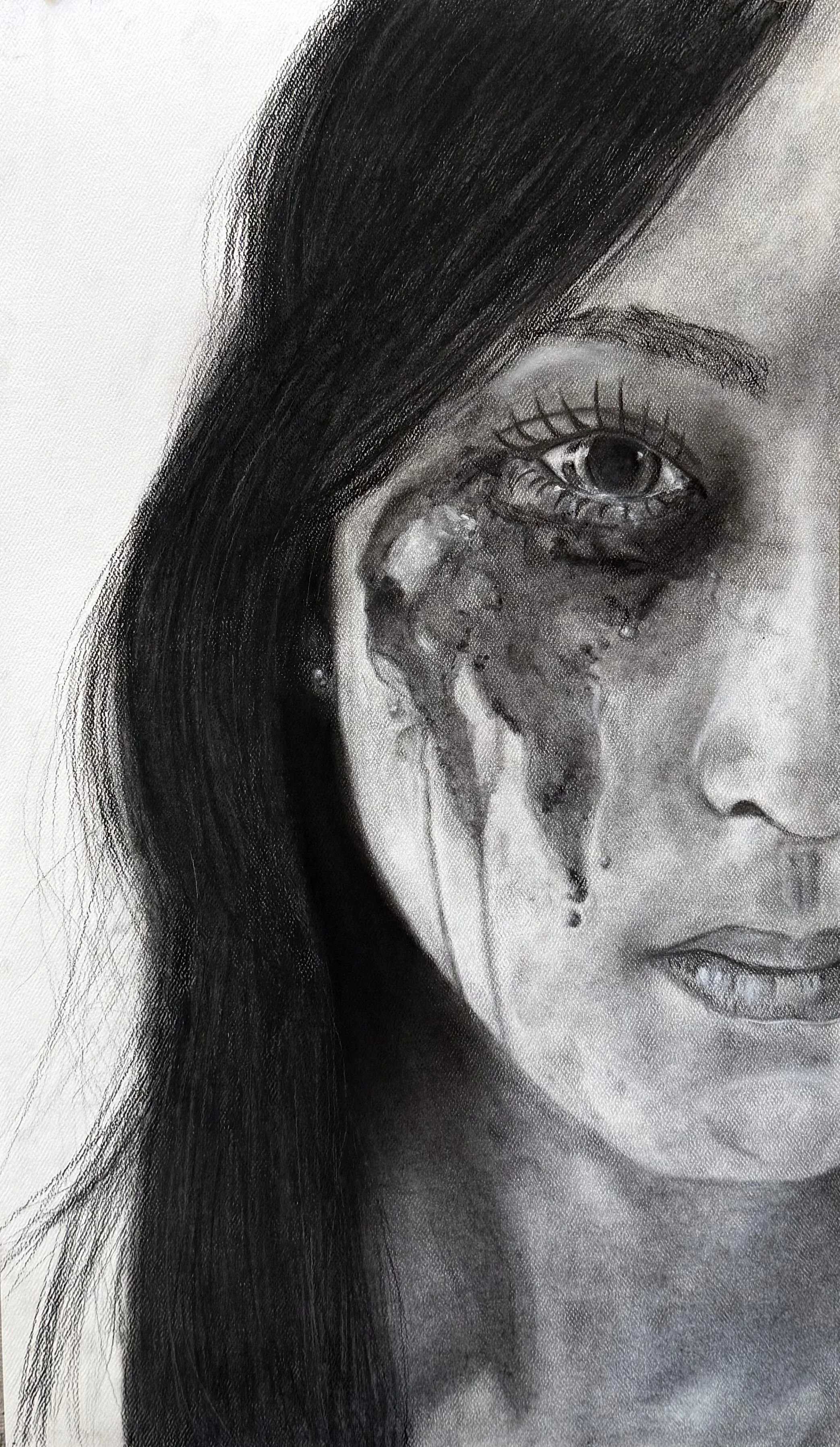
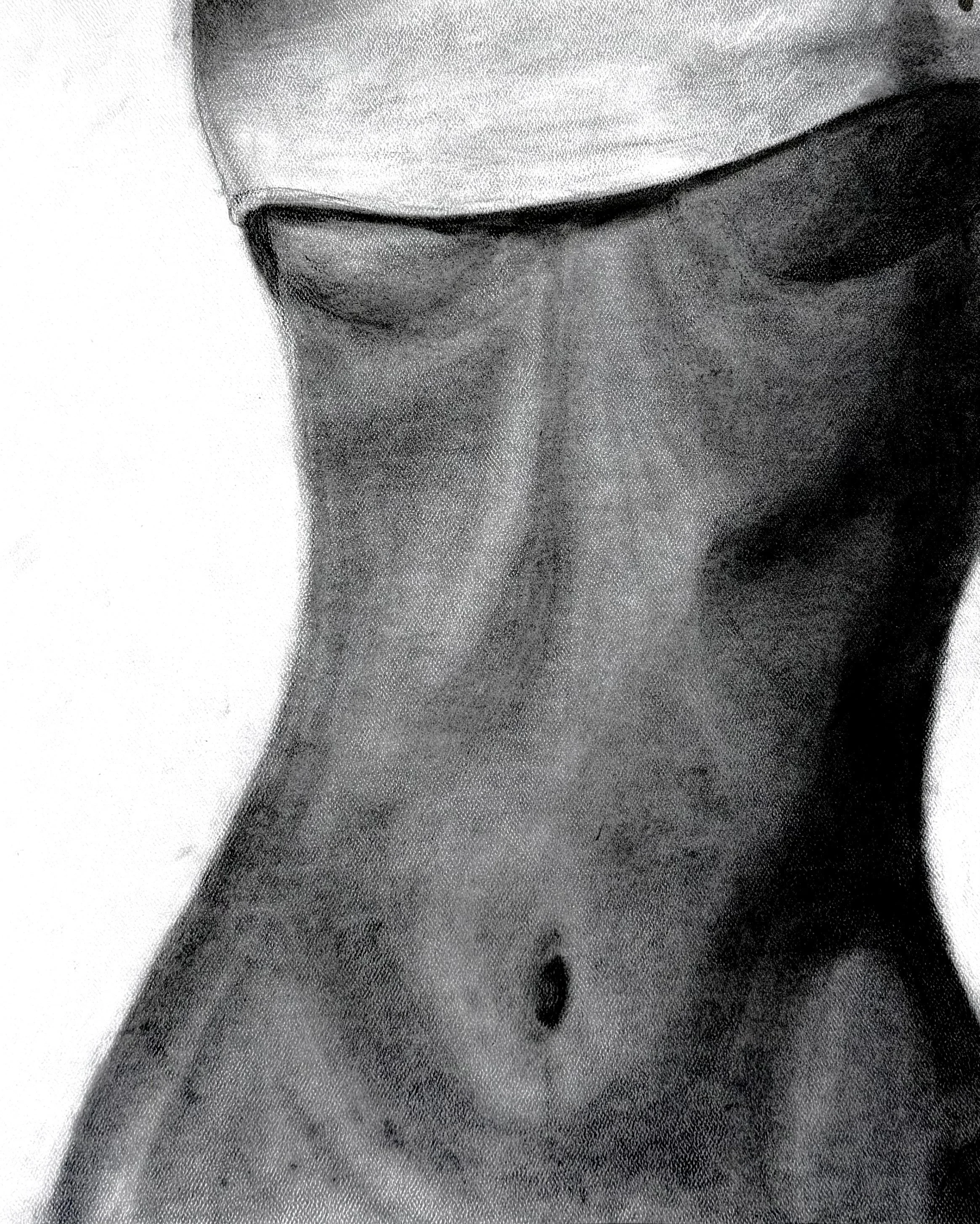
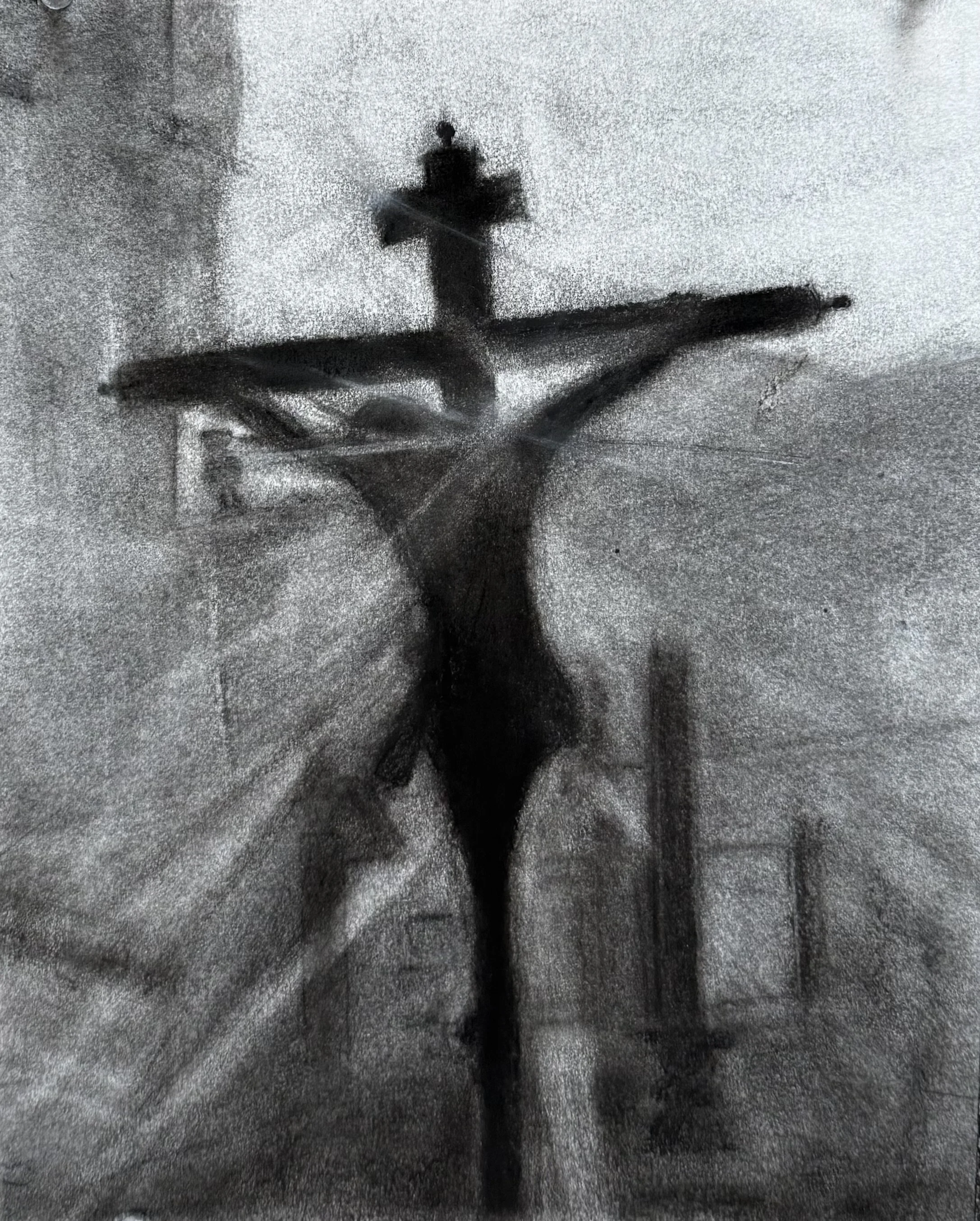
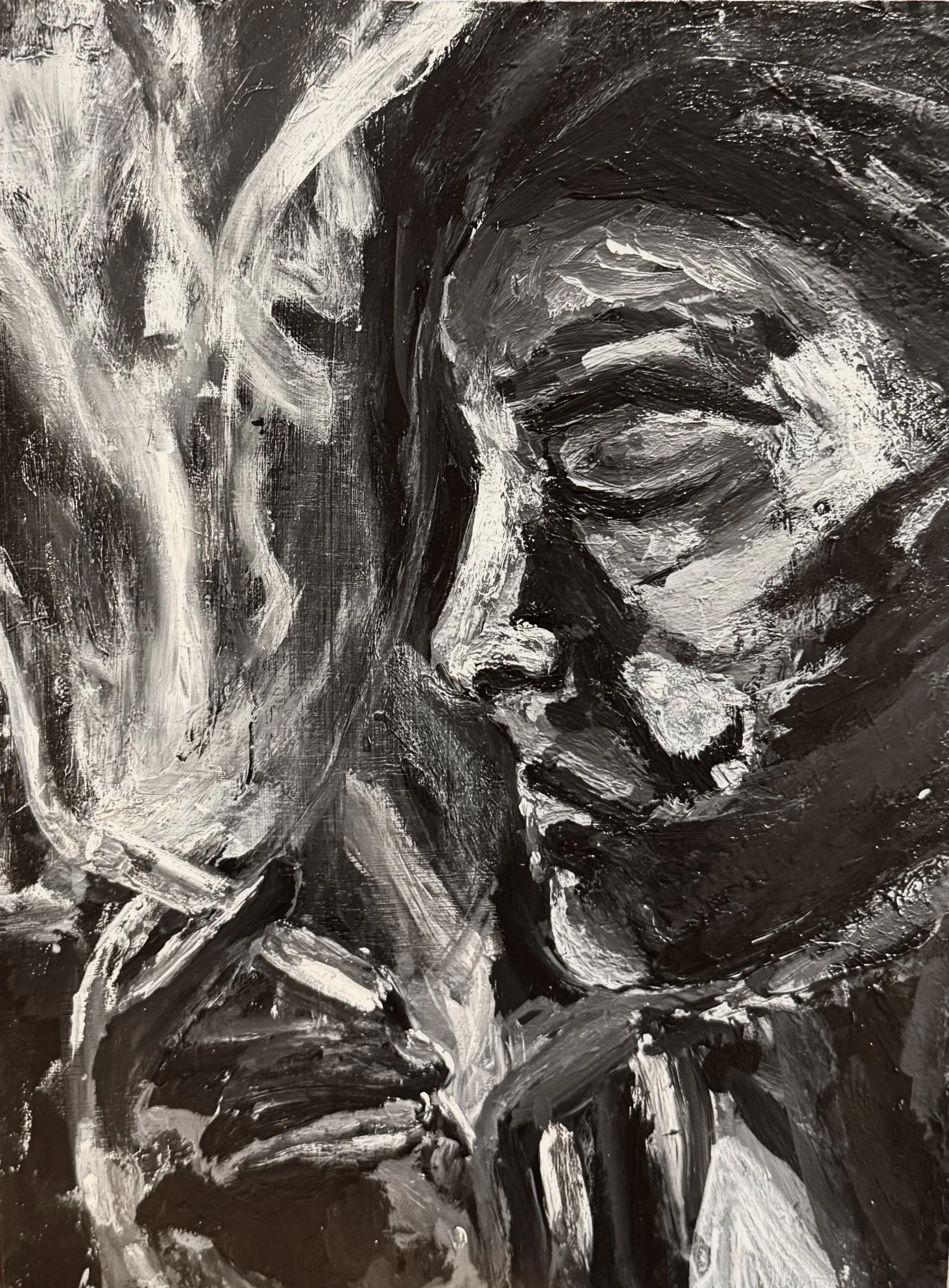
This is my first year in Art Academy, prior to this year I’ve taken visual art classes and design in high school. The medium that I work with and enjoy creating pieces with most is charcoal. I enjoy the simplicity of the medium, it feels most natural when working with it. The topics that I work with are very loose, I don’t usually constrain myself to work under one theme. But for my AP Art & Design submission, I chose the theme of “Fragility,” which can be seen in different ways, making it a versatile topic to work with.
Can you walk me through the creative process and steps you took to plan and make these pieces?
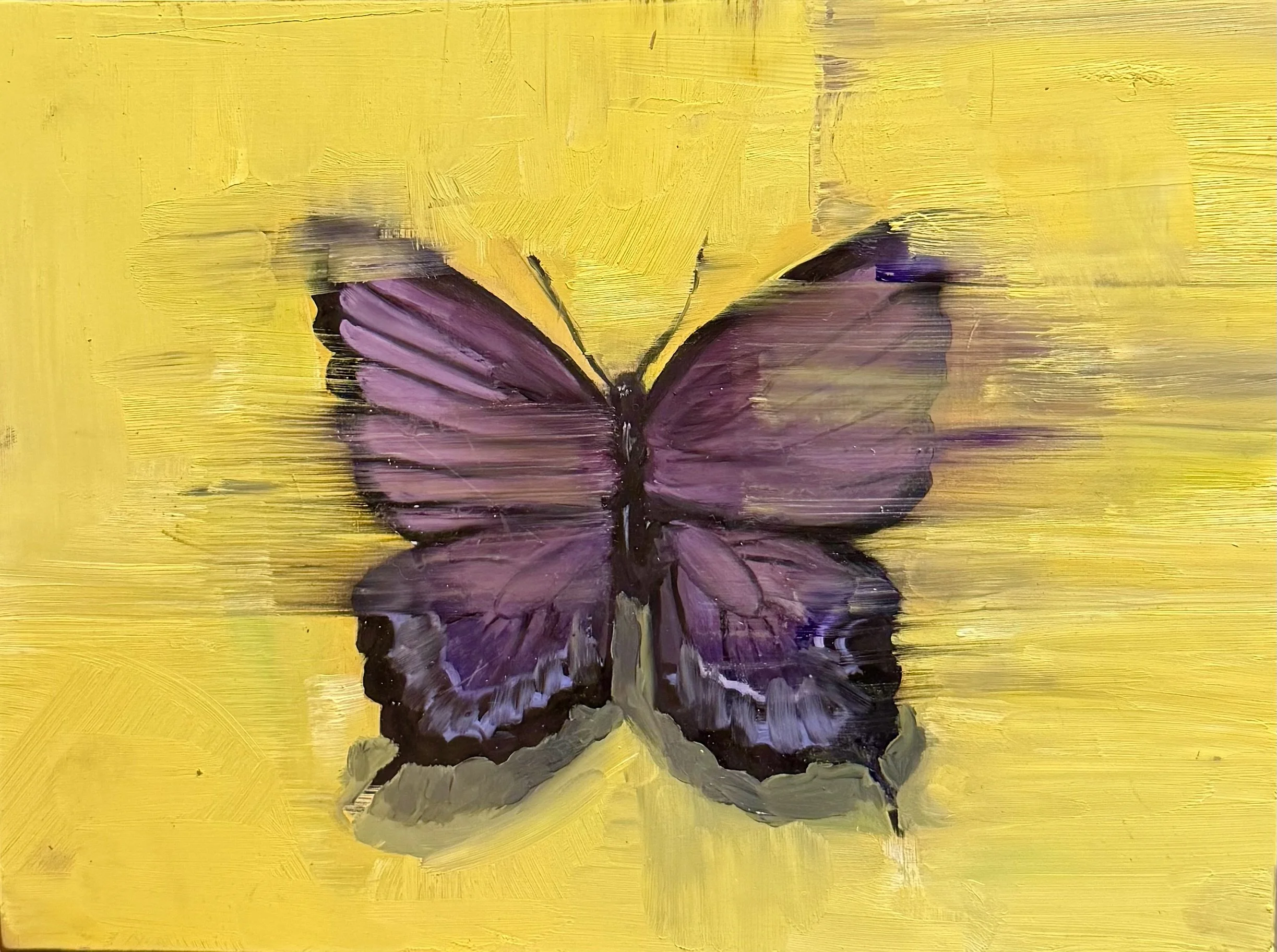
These five art works were the final pieces that I submitted for this year’s AP Art & Design. Going back to October, the theme of delicacy had first prompted me to come up with these different meanings. Yet as time passed, my theme evolved to fit the word “Fragility” more. While thinking of the different works of art I could create, I knew I had an endless amount of options to choose from. From the butterfly painting to the crying piece, I knew that each piece represented my theme in different ways, which is why, instead of planning so far ahead for my pieces, I let the ideas of each of them come naturally.
Why did you choose to use these particular mediums or materials?
When considering the different pieces I wanted to submit, I discussed with Mr. Mulhern the best way to approach AP Art & Design. I knew that I had to incorporate my different styles into one cohesive body of work. Keeping this in mind, I felt comfortable using charcoal to portray my theme due to charcoal being a strong medium for pieces with a lot of black and dark areas. I used both oil and acrylic paint to create seamless pieces, and paintings that were composed of different and uneven textures, like the match painting. For this painting, I used multiple different techniques, specifically layering acrylic paint with a palette knife to create lots of texture. This helped that painting stick out from the other pieces I had created.
What challenges did you face during this project? How did you overcome them or learn to be comfortable with them?
A challenge I came across during this project was time. Even though I started working on AP Art & Design back in October of 2025, I had to create eight different pieces. By working with Mr. Mulhern and spending hours after school in the studio, I was able to finish and submit on time.
How do you define success for a piece of art? What are your goals when creating new work?
Defining success for a piece of work can be quite difficult for me. I believe that creativity should be nowhere close to “perfection.” Even when I am referencing a renowned piece of art or artist, I know that I not only have to make it mine, but be content if it doesn’t turn out exactly the way I envisioned it. Only the artist knows how much it takes to finish their piece, so every piece they make has a story only they truly know.
What message or feeling are you trying to convey to viewers?
With the overall theme of this body of work being “Fragility,” I wanted each piece to frame fragility through altered states or non-normative forms of beauty, suggesting that beauty arises from broken, faded, or vulnerable moments. Ultimately, my pieces in this series explore how time and a person's environmental influences (such as friends and family) can weaken or transform what once seemed strong or permanent. Consequently, my work reveals that beauty is based on fragility in all its forms.